I had the great pleasure of attending a symposium held in the College of Education at my alma mater, the University of Portland, focused on this interesting subject, and the implications that it bears for effective learning and teaching. My co-participants were distinguished professors in linguistics and education science (Ellyn Arwood and Richard Christen), and two wonderful educators working on the front lines, as a classroom teacher (Bonnie Robb) and an art educator (Daniel Duford). This meeting was on the path, for the University of Portland, toward the further development of a strong emphasis on brain science-guided educational theory and practice. To which we at this blog say, “Terrific!!”

Our hands are one limb (play on words intended) of the great triumvirate (the other two being ours ears and eyes) that provides most of our knowledge about the things of the world. One emphasis of this meeting was the great value, for instructors and children, of more fully developing and exploiting this great personal resource. Richard Christen spoke compellingly about our long history of artificially distinguishing our physical actions from our mental actions. He’s right, of course. We now know that the neurological processes controlling physical movement and thought are essentially the same, and that there are extensively shared resources in these two great ‘systems’ of operation.

Ellyn Arwood broke down this barrier by pointing out that our hands can (of course) represent thinking. She used a Braille-reading blind individual as one example, because as with a visual reader, the blind reader ‘sees’ (generates the mental ideation “representing” the objects or qualities or actions or relationships that are represented on their fingertips. In another cited example, Dr. Arwood described how a blind individual can probe the outlines of a common object (for example, a hat) and literally create a 3-dimensional image of that object in their mind.

One of my favorite experiments of this class was conducted by John Kennedy now at the University of Toronto, who asked congenitally blind individuals to draw the shapes of large and small real world objects on special paper that produced raised lines on the paper as they drew. When asked to draw a car, for example, and the blind individual who had never before attempted to draw created a reasonable cartoon car. Asked to draw it in perspective (e.g., from the front) and they did a good job of it (e.g., headlamps, grill, windshield, etc.). Their drawings were usually made in 3 dimensions.

Asked to draw the car going fast, and they did the same kinds of things that a visual cartoonist might do: elevate the front of the car; follow the car with squiggly lines; twist the spokes of the hubcaps; etc. There can be little doubt that such an individual SEES (can create an image in her/his mind) WITH HIS HANDS. It is interesting to me that the brain uses the same areas for these mental reconstructions in the blind individual that it engages in actual visually-dominated reconstruction in the sighted.

Of course Arwood’s main point is that the hands are making their own very powerful contribution to mental reconstructions in the NORMAL (sighted) kid. She and Bonnie Robb described beautiful illustrations of how writing and drawing can reinforce the development of semantics and grammar in instruction, and in the brains of those kids that are ‘under construction’ in the classroom. Get the kid to associate the aural word with the pictograph (cartoon), with the written word, with the cursively-produced word, with the idea-in-the-mind, with the ‘real thing’, was a mantra.

You might note that 2 of these basic sources of understanding are delivered from the hand. For those educators reading these comments, it is no surprise for you to hear that training with the hand in writing, the use of fine-hand-control exercises in drawing, etc. are not exactly at a high-water mark in educational practice. One of the participants in the meeting put it in a nice way when she said (I paraphrase): “We are spending more and more of our time applying educational efforts directly targeting reading and math, and less and less of our time at the more fundamental skills that could actually improve learning rates that could actually improve reading and math abilities and test scores.” To which I say, “Amen”.

How can a hands-ON approach to learning contribute to learning success?

1) We know, from a neurological perspective, that multimodal sources of reference or affirmation actually directly impact semantic development and ideation. I associate an aural word with an object or action; the written word adds to my reliable sorting of the MEANING of that word–with all of its associative extensions–in my mind. Producing (WRITING) it in cursive script adds again to the selectivity and reliability of my representation of the idea of that word. A pictograph of that word adds again. From the operations of my hand in cursive or in drawing, I CONSTRUCT that idea in its sound and visual parts. From ALL of these sources, I add to the richness of my associative elaboration of meaning associations. An educator who uses a hands-OFF approach to learning (not formally involving much writing or drawing or manual skills development) is going to deprive the child from what can be powerfully amplifying neurological impacts on the development of semantic and ideational power!

2) The use of the hands in fine motor control is an important neurological prelude to reading, because it contributes to training the brain about a) attentional focus, and b) deliberate, controlled linear visual motion tracking. Those implicit skills have been demonstrated to be very important for lexical access. Bonnie Robb also described how she initiated pictograph-drawing and word-writing exercises in parallel with–or even BEFORE–reading. That makes lots of neurological sense!

3) Daniel Duford provided a wonderful description about how visceral (non-cerebral) drawing can be. Contrary to current profession-artist education curricula, where theory often dominates over practice, he argued that art is in the hand-mind. His provocative descriptions made me think about studies that show that the hand area of the brain is engaged when a person a) sees an image of a hand; or b) when a person thinks about their hand; or c) when a person sees a word that expresses a hand action; etc. In the same way, when you do something with the hand that is associative with a thing or action or thought or idea – like draw that picture or write that word or draw a pictograph or type that word – you positively bias the cortical processes representing that thing or action or thought or idea. We call this ‘synergism’!! Getting those hands in play is going to amp up learning rates!

4) Bonnie Robb also described how she used her hand in two interesting ways to bring her class into a learning context. First, she employed a series of hand gestures, to substitute hand signs for basic classroom instructions. Students responded to these special signs as if they were members of their own little secret club — which they were! Neurologically, hand gestures in communication provide a good way of alerting students because they represent a convergence of information reinforced in 3 modes: visual; hand; verbal instruction.

Second, Bonnie used pictographs to help children understand basic principles of classroom organization and order, and to train kids to understand the picture = idea-in-your-head connection – then beautifully elaborated that strategy to teach kids about things and actions of the world. This inspiring teacher, as I noted earlier, has to write a book about these neuroscience-enlightened practices.

In my view, training in fine motor control of the hands through coloring/painting/drawing is a crucial part of preparation for school. Training the convergent eyes in close, focused attention, and training the tracking of hand-produced motions provide is a key for developing implicit abilities that support lexical access.

I believe that training a child to draw to represent the parts and essences of the objects and qualities and actions and relationships of the things of the world, and training a child to represent the sound parts of the world through orthographic script progressions provide key assets for reliably sorting and associatively elaborating our mental constructions of all of these aspects of our (the kid’s) world. Ellyn Arwood explained that these multiple confirmations and these associative elaborations are the very essence of learning. She’s right, of course. She’s also right in understanding that a hands-ON approach is a key to achieving that learning with high efficiency.

Of course many children at older ages in school do not have the kind of implicit-skills foundation that comes from effective early instruction practices like these. To recover that older learner, we have to overcome the lack of crucial implicit abilities in listening and vision and in hand control, by helping them build a solid foundation. Our Fast ForWord exercises were designed to achieve that for listening, and for some aspects of reading itself. They intelligently combinative audio-visual-manual training strategies that were the primary subject of this meeting can also contribute greatly to establishing foundation skills in that older learner.

Share and Enjoy:

  • Facebook
  • StumbleUpon
  • TwitThis
  • E-mail this story to a friend!
  • Digg
  • del.icio.us
  • Reddit
  • LinkedIn
  • Slashdot
  • Tumblr

Today, Posit Science announced the release of a new computer-based visual training tool, DriveSharp, specifically designed to improve the performance abilities of adult automobile drivers to a degree that can be expected to very substantially impact their driving safety.

This training employs two very important brain plasticity-based strategies to improve your visual assets that support safe driving. The first is the “Useful Field of View Training” developed and patented by Drs. Karlene Ball (University of Alabama at Birmingham) and Daniel Roenker (University of Western Kentucky). Their training tool addresses a key problem that arises in older individuals: the progressive contraction of their “useful field of view” (UFOV). As you get older, you progressively lose the ability to accurately detect and respond to visual events in your far visual periphery. Even if you DO detect what’s happening at the far left or far right side of your vision, your response to it is very slow. By age 65, this contraction of your UFOV approaches 25%; by age 80, it is roughly 50%! In our fast-moving world, losing control of one’s peripheral vision is a main cause of driving accidents. You simply don’t see what’s going to hit you — and even if you do, you can’t respond fast enough to avoid a collision.

Ball and Roenker demonstrated that these losses are substantially reversible, through appropriate, intensive training, in almost all older drivers. UFOVs can be re-expanded to relatively youthful ability levels through only a few hours of exercise. The result: About 50% fewer driving accidents in the over-65 population. Moreover, once your UFOV is opened up again, you use it! Benefits of training have been shown to be sustained over at least 5 subsequent years. Of course they can be greater still if you just spend a little time (a few hours) each of those years, driving your UFOV abilities to their peak — to assure that you fully sustain abilities that applied when you were a much-younger driver. You can use DriveSharp repeatedly, over the rest of your days, to keep yourself in fine driving fettle!

The second training program that is included in DriveSharp is designed to improve your ability to keep track of more than one thing happening at the same time. This fundamental visual skill — called “multiple object tracking” (MOT) — also dramatically declines as you get older. In studies conducted in the state of Pennsylvania with the help of Allstate Insurance, we have shown that MOT deterioration also very substantially parallels an increased risk for having a traffic accident as you get older. Again, with a few hours of intensive training, a youthful MOT performance level can be achieved for most individuals. The result: A still FURTHER increase of driving safety.

Allstate Insurance has been an important partner helping us demonstrate the values of this form of training in their older driving cohort. More recently, the American Automobile Association (AAA) Foundation has examined the research behind these tools, and is strongly endorsing their use by the approximately 50 million AAA club members. If you’ve reached your 50th birthday, DriveSharp training is especially important for upgrading and sustaining your driving competence. It’s all about maintaining your performance abilities in driving as in all other ways at the highest possible level, throughout the second half of life. In fact, EVERY driver can improve these key visual competencies in ways that contribute to faster and more reliable corrective actions behind the wheel!

In case a 50% reduction in the probability of dying behind the wheel (or injuring/killing some other innocent person) is not enough incentive for you to initiate this training, you might be interested to hear about a few other benefits demonstrated by published studies originating with the Ball/Roenker team (including University of South Florida scientist Sherri Willis and a University of Iowa scientist, Fred Wolinsky).

1) You’re healthier after DriveSharp training!
Five years after training, Physical indices of Quality of Life are more than 30% higher — maybe because you get out more. And there is an approximately 30% lower probability that you suffer from depression — perhaps for the same reason!
2) Trainees are much more likely to have retained your driver’s license — and to have sustained their personal independence.
3) After DriveSharp, you are a more confident driver, as expressed by gains in the number of times you drive each week, by an increase in average driving distances, and by your driving more often at night, or in the rain or snow.
4) Without training, you can scare an expert observer sitting in the passenger’s seat next to you because you make many more dangerous maneuvers; once you’re trained visually, he/she can calm down again!
5) Sherri Willis has shown that in the 2 years after you lose that license because your visual reception and visual response abilities have left you, there is a more than 4X greater chance that you pass on to the Happy Hunting Ground. Sustaining your driving qualifications and abilities is literally life-extending.

I can’t think of too many simple things that you could do that would be better for you, especially if you have entered the second half of your time on earth, than spending a few hours completing this game-like training program a time or two each year. It’s a small investment that will pay off with substantially safer driving — and with a longer, healthier, higher-performing, more useful, and more independent life.


Try DriveSharp now: If you are a member of one of the participating AAA clubs, please visit your AAA club’s website for more information and a special offer on DriveSharp. If not, please visit www.DriveSharp.com or call (866)599-6463 to learn more.
Participating clubs are: AAA Northern California, Nevada and Utah; Auto Club South; AAA Mid-Atlantic; AAA Southern New England; AAA East Central; AAA Carolinas; AAA Missouri; AAA Allied Group; AAA Washington; AAA Ohio; AAA Arizona; AAA Colorado; AAA New Jersey; AAA Miami Valley; AAA Pioneer Valley; AAA MountainWest; AAA NW Ohio; and AAA Schuylkill County.

Share and Enjoy:

  • Facebook
  • StumbleUpon
  • TwitThis
  • E-mail this story to a friend!
  • Digg
  • del.icio.us
  • Reddit
  • LinkedIn
  • Slashdot
  • Tumblr

I delivered a lecture at the University of Konstanz in Germany two weeks ago, as a part of the celebration of the 100th Anniversary of the Heidelberg Akademie. This is one of 7 scientific academies in Germany. Because Germany was created as an amalgamation of powerful states in the 19th Century, its scientific academies originate with and are still identified with those entities — in the case of the Heidelberg Academy, with the state of Baden-Wuerttemburg.

Because I was appealing to a wider scientific audience than usual, my subject was a consideration of the societal consequences of ‘the brain plasticity revolution’. Contemporary neuroscience is revealing, for the first time in our history, our true human natures. It is defining the true rules of human behavior, as brain process rules. Moreover, in what I call “The Theory of Personal Evolution”, neuroscience has generated a lucid mechanistic explanation of how our individual ‘Personhood’ is created by the brain plasticity processes in our brains, in each of our lifetimes.

Human wisepersons and societies have had great fun pondering about the mysteries of the origins of the ’self’ — that unique, often, conscious embodied ‘person’ that is you, or me (or her or him). Philosophers and psychologists and anthropologists and shamans and gurus and priests and sages and physicians numbering in in the thousands or millions in every generation of our species for nearly a hundred thousand years have struggled to understand the fundamental nature of we humans: the origin of that embodied ’self’; an understanding of the bases of origin of our behaviors; the sources of variability that contribute to small or great achievement, or to behavioral failure or ‘abberation’; the forces that underlie the genesis of, and that drive and shape the progressive evolution of our emergent ‘culture’; among other great questions.

We now have first-level scientific answers to these questions. We now understand the basic processes that underlie the genesis of the ’self’; we understand the forces that bind us together as members of a family and tribe, or that drive us into conflict with feared members of another social cluster comprised of persons just like us; we understand the neurological basis of the skill repertoire that defines us, operationally; we have a deep and rapidly growing understanding of the origins of the positive and negative extremes of behavior; and we now understand the main forces that drive cultural change. There is something very new and special about this understanding. For the first time in our history, IT (this modern science) DEFINES US. I liken this understanding to the crystalized appreciation, in astronomy, that the planets evolve around the sun, to the understanding in physics that the behavior of physical objects are governed by mathematical laws, or to the understanding in biology that the modern biota is the product of roughly 2 billion years of progressive evolution based on the principles of competition impacting survival. Now, for the first time, we have also demonstrated, scientifically, that we — the PERSONS that we are — evolve, following known rules, via brain plasticity processes, within our skulls, within our lifetimes.

That is another way of saying that we can stop arguing about WHAT we are. We know. We can stop arguing about WHY we behave the way that we do. We know the origins of our behaviors. We can stop arguing about WHO we are. We know. We can stop arguing about WHERE cultural evolution is taking us. We know the forces that govern it, because we understand how we carry them within our brains.

From this new understanding should come a reconsideration of the education, organization and positive control of human societies — one based on a true understanding of our nature, with all of its limitations and power. From this new understanding should come a new approach to dealing with the neurological and psychiatric and social vicissitudes and illnesses that plague human societies — now, more than every, challenging our very survival on the planet. And from this new understanding shall come possibilities of still-more-powerful exploitation of our urges and weaknesses that can further negatively distort our human societies — or, in an alternative universe, exalt us humans, making the most out of what we are, in part by understanding our weaknesses and by richly exploiting those things that more consistently contribute to positive personal and societal evolution.

Frankly, I’m rooting for that alternative universe!

Share and Enjoy:

  • Facebook
  • StumbleUpon
  • TwitThis
  • E-mail this story to a friend!
  • Digg
  • del.icio.us
  • Reddit
  • LinkedIn
  • Slashdot
  • Tumblr

I received a wonderful comment about the hypothesis that early umbilical cord clamping might contribute to the risk of origin of autism from a wonderful former colleague, Dr. David Blake, a researcher in the Department of Neurology at the Medical College of Georgia. His observations:

Fraternal twins typically have different placentas, whereas identical twins share a placenta but have different cords. The blood supply, and pre-clamping susceptibility to anoxia, would surely be different.

There are plenty of reviews associating prenatal or perinatal anoxia with autism already (as well as advanced maternal and/or paternal age). Given that early cord clamping clearly impacts perinatal anoxia, and has been recommended against, it would seem prudent to just change practice and see where that leads in a few years. The evidence that would lead one to think that early cord clamping is a bad idea is elaborate and complex (and amazingly compelling with respect to autism), but changing practice, immediately, is not.

As for the idea that one could statistically detect whether cord clamping is the problem, we can! Amish people do not clamp the cord until placental delivery, and they have no autism rate. The same is true in Somalia, but Somalian immigrants to westernized medical countries have high rates. Try to systematically find out autism rates and immediate cord clamping rates, on a country by country, or region by region basis. It is a task someone should get on immediately, but it will take a lot of effort.

An interesting discussion of the “Amish anomaly” re autism incidence has been provided by Dan Olmsted, who went to Amish Country to find the 150 or so individuals there who could be expected to be severely autistic. They aren’t there. He seems pre-disposed to believe that the difference lies with their non-vaccination. Many studies now show that this is unlikely. As David Blake points out, there is another difference in this population: In Amish birthing, by tradition, the cord is not clamped prior to placenta delivery.

The picture with autism in Somali children is a little murkier. It turns out that the incidence of autism is very high in children of Somali origin who were born in the US (several times higher than normal), while it appears to be very low in Somali children born in their native country. Again, vaccination has been identified as the likely cause by Somali parents and by many observers — but again, clamping follows placental delivery in Somalia, while the cord has been clamped without delay as a general practice in Minnesota, where a high incidence of autism in these children of Somali immigrants was first discovered.

I agree with David. These observations strengthen the arguments that early cord clamping could be a contributing cause of higher AD incidence. We should get our act together and determine, ASAP, the facts of the matter.

Perhaps this IS just another case of outwitting ourselves, as we attempt to outwit that clever old woman, Mother Nature. For the sake of all of the havoc that just might be attributed to this factor, let’s not let another year go by without having these answers.

An afterword: In reading a Huffington Post discussion of the “Minnesota Somali Autism” issues written by David Kirby, it was a sad thing to read the responses of a Somali woman whose family had suffered from this “American disease”. “Some autism families have returned to Somalia (because) they were angry and disgusted with the United States. The nation that offered them refuge was the same nation that made their children so sick. They think that, by returning home, maybe they can make their children better.” To view Somalia as a place in the world where children can escape from a great American miasma seems to this observer to be a rather surprising state of affairs!

Share and Enjoy:

  • Facebook
  • StumbleUpon
  • TwitThis
  • E-mail this story to a friend!
  • Digg
  • del.icio.us
  • Reddit
  • LinkedIn
  • Slashdot
  • Tumblr

I delivered a lecture sponsored by the Danish Neuroscience Society and the Helene Elsass Center (a wonderful new research institution in the suburbs of Copenhagen) that has developed a state-of-the-art research and treatment center focusing on cerebral palsy. I was delighted to sit down with the Center’s Director, Peder Esben Bilde, to review new training software developed by therapists and University of Copenhagen scientists affiliated with the Center, and implemented with the help of a local computer game company. The software uses a conventional computer camera to dynamically record the location of colored bands strapped around a few fingers or hand or wrist or elbow or neck or ankle. The software tracks the motion of these bands in relation to stationary or moving computer-screen-located targets. About 50 exercises, each very flexibly graded in ability, have been developed to date. Many exercises require specific movements to provide cognitive answers, nicely integrating these two aspects of training relevant for rehabilitation in these movement-impaired children. Using this strategy, at their easiest levels, even very impaired children can initiate feedback-guided movement training. As the child progresses in training, given feedback on the child’s performance abilities provided by the software, the therapist supervising the training adjusts the exercise difficulties once each week. Although I have not seen their outcomes results and initial trials are uncontrolled (controls are difficult in this population because of the very substantial variability in performance abilities in these kids), the staff in this Center has a high level of confidence that they have made a breakthrough in treatment, and given my superficial review of their software and their high enthusiasm, they may well be correct.

The Helene Elsass Center, richly endowed by the Ms Elsass, a Danish benefactor who lived with cerebral palsy herself, is world-class, a wonderful resource for the Danish public, and in high likelihood, for the World. While their research and development initiatives are still at an early stage, this team is off to a grand start. Given the great need in the world, I am committed to helping them in whatever way possible, in their further refinement and elaboration, and in helping them bring them out to the millions of individuals who could benefit from their use. In future blogs, I’ll try to keep you informed about their research progress, and about how and when these tools might be more widely available. If you’re in reach of the Elsass Center in Copenhagen, and YOU have a child in need, you might consider raising your hand to help them, as well.

Share and Enjoy:

  • Facebook
  • StumbleUpon
  • TwitThis
  • E-mail this story to a friend!
  • Digg
  • del.icio.us
  • Reddit
  • LinkedIn
  • Slashdot
  • Tumblr

Millions of individuals (2% of humankind) are plagued by continuous sounds generated in their skulls, not coming from the real world. Because these ringing or roaring sounds are inescapable and because they strongly influence emotional-control processes in the brain, they can literally drive an individual who hears them incessantly just a little bit crazy. No one dies from tinnitus (although its sufferers have a substantially elevated suicide rate). But it represents one of a long list of brain plasticity-generated problems that can substantially degrade – and in the extreme, destroy – a sufferer’s quality of life.

I am writing this blog from a scientific meeting in Italy at which 20 top neuroscientists (about half of who some level of direct understanding of tinnitus; the other half are participating as ‘great thinkers’ from other related domains of neuroscience) have gathered together to discuss

a) the neurological origins of tinnitus,

b) as a basis for developing new strategies for more effectively treating it.

The benefactor supporting this meeting is a tinnitus sufferer who, like many others in his position, would gladly trade much of what he owns for a treatment that could just make the ringing go away. I thought that you might be interested in hearing a brief summary of how 20 top experts a) view tinnitus, and b) see possible new possibilities for more effective treatment.

A meeting consensus is that tinnitus represents another ‘failure mode’ of our self-organizing brain, attributable to its plasticity. We know that chronic tinnitus accompanies a hearing loss in which there is sharply bounded damage within the inner ear. However, once established, even the total destruction of inputs from the damaged ear (achieved, for example, by surgically severing the nerve from the ear to the brain) eliminates a tinnitus only about half the time. There are two ways to interpret this finding. For patients in which the tinnitus IS relieved by eliminating inputs from the inner ear, the persistent ringing is obviously dependent on ongoing, abnormal patterns of activity that the damaged ear is feeding to the brain. For patients in which it was NOT relieved, the tinnitus must have a second basis of origin –- or must have grown through plastic changes in the brain to the extent that it can now sustain itself, no longer requiring ear inputs to generate the continuous ringing or roaring noises.

Where does the persistent sound percept come from? Why DOES it persist? Why and how does it spring from (is initially dependent upon) an area of sharply-bounded damage in the inner ear? How can/does it plastically evolve in the brains of some individuals so that it can persist in the total absence of inputs from a damaged ear? How can the source of the continuous sound be weakened, or eliminated? These subjects were richly and provocatively discussed by these world experts. You may consider this to be a consensus report, biased somewhat to reflect my own conclusions.

WHERE DOES THE PERSISTENT SOUND PERCEPT COME FROM? It almost certainly comes from an enlarged sector in the auditory cortex in which neurons are responding in a super-coordinated way (expressing higher-than-normal cell assembly coupling) in the absence of sound. That coordinated activity effectively engages the hearing system in the brain — and is perceived as continuous sound. Scientists can actually record elevated activity coming from this enlarged cortical zone in the quiet, and have shown that the louder and more aggravating the tinnitus (in an individual sufferer, or in different sufferers), the stronger this distorted activity.

Why/how does an enlarged assembly of cortical neurons come to respond together, in a strongly coordinated way? We know that we can grow the power of representation of any sound stimulus, even in a normal, intact brain, by heavily training the brain to make distinctions about that sound. For example, we have trained an animal to make distinctions about the rate of stimulation of a particular, constant sound, or arising from a particular point on the skin of the hand. The representation of that sound or point of skin grew and grew and grew in the cortex. Why? Because in the natural plasticity processes of the brain, they were the competitive “winner”; all rewarded behaviors strengthened (grew) their representation. That competitive strengthening of synaptic connections applied BOTH for input from that sound or point on the skin, and for the inter-connections between the growing populations of cortical neurons that represented it over a larger and larger and larger (ultimately, hundreds of times greater-than-normal) cortical zones. Neurons in such strongly cross-coupled zones want to respond together in time. As the power of their cross-connections grow, neurons respond together, cooperatively, even when there is NO sound or stimulation of the skin. You FEEL this activity as a continuous tactile sensation, OR AS A TINNITUS. Because of its competitive power, once such a strong representational distortion is well-established, it is very difficult to break it down.

Why does the neuronal population grow and strengthen? With a sharp border of damage to the inner ear, neurons on the intact, healthy side are competitive ‘winners’. The weak input from the domain of hearing loss is overwhelmed by strong, sound-generated inputs from the relatively healthy neighboring zones in the cochlea. In fact, scientists led by Dr. Eric Young at Johns Hopkins conducted studies more than a decade ago that showed that the “auditory ganglion cells” delivering information to the brain via the “auditory nerve” also generate strongly cooperative responses near the edges of a sharply bounded hearing loss. This synchronized activity delivered into the hearing brain is by itself especially powerful, for competitively dominating the nearby zones that formerly represented the now damaged ear. In tinnitus, then, the more normal neurons representing the better/healthier, more-intact inner ear have two reasons to competitively grow and sustain themselves. First, they are far more vigorously engaged than are the inputs from the more-damaged inner ear regions. Second, the input from the healthy regions are given special competitive power because of mechanical changes in the ear accompanying sharply bounded damage. THEY respond cooperatively, and hence, still MORE powerfully (as if they NEEDED competitive advantages!).

This is one of a number of instances in which that Mother, Nature or the Creator of the Universe constructed us with in-built flaws that, every so often, rise up to plague us, and despoil many an otherwise happy day.

The result of these natural competitive processes, operating to adjust to sharply imbalanced inputs from a damaged inner ear? A large-scale distortion in how the brain represents sound, by which it greatly over-represents sounds that border the region of inner ear damage — a distortion so great that it induces large populations of neurons to respond together, cooperatively, continuously — thereby generating a continuous, audible sound that can drive a person nuts.

How can we suppress a tinnitus? Scientists have tried a number of solutions. One strategy has been to aggressively adapt hearing sensations in the frequency range of the tinnitus. This approach, still under intensive study, has been mildly successful. A second approach has been to mask the tinnitus with continuous noise, or to trained adaptive adjustments to noises in an attempt to teach the sufferer to control the loudness of the ongoing tinnitus. These crude noise stimulation/adaptation methods are probably the most widely applied therapeutic approaches, and are often helpful for the tinnitus sufferer. A third approach has been to magnetically (or directly electrically) stimulate the brain, either to directly suppress responses in the stimulus-generating cortical zone(s), or to excite plausible sources of cortico-cortical feedback that have been shown to suppress activity in these zones (\for example, to suppress the hearing of your own voice as you talk). A fourth, novel approach described by Professor Christov Pantev at the meeting engaged the patient in about 1 hour/day of active music listening, during which time the music was filtered to exclude stimulation in the tinnitus-frequency range. The goal was to progressively competitively weaken the tinnitus frequencies, by competitively advantaging other more-distant sound frequencies. Moderate, but quite consistent and persistent tinnitus suppression was recorded in these patients. Sixth, other scientists (including my own research group) has attempted to train individuals to make sharper distinctions about sounds in these non-tinnitus-frequency ranges. This seems to help some but not all patients. Similarly, some patients that have been engaged in active listening with our “Brain Fitness Program” have recorded strong tinnitus suppression; others have received little or no benefit from such ‘competitive listening’ training. Seventh, we have been studying the potential use of a ‘reverse (negative) conditioning (training)’ method to try to directly weaken the neurological representation of the offending sound. We do not yet know if this very promising approach will be successful. Eighth, a former doctoral student from my laboratory, Michael Kilgard, has been able to create a model of tinnitus in an animal (rat), then shown that it can be broken down (strongly cross-coupled neurons that appear to be generating the tinnitus can be weakened) by a particular form of electrical stimulus-assisted plasticity. If their strategy (being pursued by a small startup company, MicroTransponder, Inc.) can be applied in humans, it may provide the most effective method up to this time for suppressing a tinnitus.

No certain or reliable cure for tinnitus is in hand. At the same time, PROGRESS IS BEING MADE, and several approaches that are now being pursued have considerable promise. Perhaps soon, it will all go away. Let us hope so.

Share and Enjoy:

  • Facebook
  • StumbleUpon
  • TwitThis
  • E-mail this story to a friend!
  • Digg
  • del.icio.us
  • Reddit
  • LinkedIn
  • Slashdot
  • Tumblr

I had the pleasure of spending a day last week talking with a world authority on brain plasticity issues, Harvard professor Alvaro Pascual-Leone. Dr. Pascual-Leone has employed a special tool in many of his studies, both to document brain change, and to induce it for the benefit of patients. That tool is direct magnetic stimulation of the brain. A very powerful magnetic pulse applied externally over the scalp can be localized to excite a limited brain area. Alvaro and his colleagues showed, historically, that they could actually reconstruct the orderly representations of body movements in the brain by systematically moving the site of stimulation across the surfaces of your skull. Moving from the top of the head down toward the ears, they evoke fine movements from the feet then legs then trunk then arm then wrist then hand and digits then face. Among many interesting plasticity studies, they then trained individuals to improve their control of particular movements of the hand, and showed that those movements GREW in extent as a result, manifesting progressive plastic changes in hand movement representations induced by training.

Dr. Pascual-Leone — and other investigators in the Neurology Institute at NIH and in other world neurology laboratories — have conducted a substantial variety of such studies documenting the fact of large-scale brain plasticity in human brains. Especially over the past decade, medical scientists have also tried to employ such stimulation to drive enduring, helpful plastic changes in the brains of individuals in need of help. In some applications, stimulation is applied in forms that are believed to suppress activity in underlying cortical areas (e.g., to weaken a source of activity that might be generating epileptic seizures; persistent pain; etc.). In other applications, stimulation is applied to activate a source of ‘corrective’ activity (e.g., to activate a cortical area contributing to positive feelings, to help chronically depressed patients).

Interestingly, these medical strategies have evolved empirically without scientific documentation of EXACTLY what changes in cortical activities are induced by magnetic stimulation. Alvaro and I have agreed to try to answer these fundamental questions together, once and for all, because the answers can clarify ways in which these strategies can be more effectively and broadly applied — and can further inform us about both positive and negative consequences of its use.

If you are interested in meeting this great Spanish-American neurologist talk about this science in his own words, check out the video below:

Share and Enjoy:

  • Facebook
  • StumbleUpon
  • TwitThis
  • E-mail this story to a friend!
  • Digg
  • del.icio.us
  • Reddit
  • LinkedIn
  • Slashdot
  • Tumblr

I made the mistake of watching a NOVA program that celebrated the career and scientific achievements of an important biological scientist, Professor E.O. Wilson. Dr. Wilson has been a wonderful observer of the behaviors and lives of ants, termites and other ’social insects’. He describes them as instinctive creatures whose behavior is strictly determined by their programmed genetics. In an attempt to generalize his observations, he recorded reliably repeated behavioral observations in monkeys, documenting a series of social phenomena that — because they are held in common — must be inherited by all monkeys of that species. As he wrote about this subject, he then made a great leap to humans, stating that we’re just another species that is imbued with common, inherited (human) traits that we all share — which, of course, is true.

Alas, Professor Wilson then jumped from this statement of the obvious to exaggerate the role of inheritance as a source of explanation for our behaviors. On the NOVA program, he made the bald (untrue) statement that he had stepped into a firestorm of criticism because sociologists saw our brains (the neurological basis of our behaviors) as a ‘blank slate’. To the contrary, Professor Wilson believes that the slate is pretty much full. it’s NATURE trumping nurture, for the professor.

The reason that sociologists opposed his arguments that our genetics explain our behaviors is because they knew, from a very long history of studies of the origins of human behavior, that we humans just aren’t quite that simple.

How should we think about ‘nature’ vs ‘nurture’? The issue has been resolved for decades.

First, consider NATURE: We’re all humans. Not giraffes. Not squirrels. Not alligators. Not tenrecs. Not spider monkeys. We humans share general physical and behavioral characteristics that define our humanity. We’re social creatures. We’re bipeds. Watch the general movements of a band of human hunters, or of human gatherers, and their movements and reactions and social interactions will follow a specifically-human pattern. Our complex emotional repertoires, on the statistical average, are shared by other members of our species. When they were documented by the earliest human writers (e.g., the Greek poets and playwrights) , the elementary characteristics that define the complex ways that we humans feel and interact with one another are ageless, at least over these several thousand years of our history. Our communication abilities, more elaborate than any other mammalian species, derive from special features of the vocal track and our neurological control of it, and from the characteristics of our neurological processing of complex acoustic information that, in detail, are specifically human. As a consequence, the thousands of human languages share common architectures and ‘rules’ for their reception and production. ALL of these fundamental characteristics that define our core abilities are, of course, inherited.

Second, consider NURTURE: We humans are the most strongly differentiated operational creatures on the planet, and our remarkable tribal and individual differentiation stems directly from a remarkable scale of brain SPECIALIZATION driven by brain plasticity. Ants, termites or even monkeys do not have an equivalent capacity for experience-driven brain remodeling. Each one of we humans is defined operationally, as a distinct ‘person’, by billions of moments of experientially-driven CHANGE (plasticity) in our individual brains. A large proportion of those experientially-driven moments are internal, driven by our memories and thought and reasoning. By this remarkable capacity for CHANGE, operating more magnificently in our species than in any other, we are each absolutely unique Persons, no two identical. Vive le difference!

Since a main ‘gift’ handed to us by our genetics is the gift to be DIFFERENT, individual by individual, and because that individuation can result in a truly remarkable range of behaviors in our species — far greater in its extent that are the differences that distinguish any other species from all others — Dr. Wilson’s critics correctly responded to his exaggerated Nature-First perspective. Nurture can lead one clan to eat their con-specifics for dinner, while another clan would abhor such behavior. One clan can be matriarchal, and the next patriarchal. One can be monogamous, the second polygamous, the third (temporarily) celibate. One can treat every visitor as a friend, while the next will enslave them and the third kill them. One will act on their dreams, even if they are thereby instructed to kill or banish or torture their children, while the second would be completely repulsed by any such behavior. One would rob as a rule, while the second would give as a rule. One would worship the sun, the second an invisible spirit, the third a thousand spirits, the fourth the dead, the fifth spirits embued in every living thing, the fifth the earth, the sixth a living ruler, the seventh nothing at all.

In our distortions, we are lovers, haters, saintly, evil, mechanically skillful, clumsy, mentally agile, dull-witted, empathetic, apathetic in 6.5 billion complicated variations, many extremely distorted every which way, substantially resulting from NURTURE.

Professor Wilson, in the human species, it’s never been NATURE or NURTURE. You are — we all are — a wondrous collaboration!

A final note: Social insects (bees, ants, termites, et alia) learn and adapt in simple but important ways through brain plasticity. THEIR tiny ‘brains’ are a LOT more plastic (it turns out) and adaptable than historic biology had imagined!

Share and Enjoy:

  • Facebook
  • StumbleUpon
  • TwitThis
  • E-mail this story to a friend!
  • Digg
  • del.icio.us
  • Reddit
  • LinkedIn
  • Slashdot
  • Tumblr

In a July 9th, 2008 post, I added oxygen deprivation incurred at childbirth as another factor potentially contributing to an increased incidence in autism. As I noted in that blog:

“We have published compelling evidence that peri-natal anoxia meets all of the other criteria for adding to “noisy” brain processing. It can have strong, selective impacts on cortical inhibitory processes, and degrades the ability of the cortex to develop normally-selective characteristics of response (see Strata, Merzenich et al, PNAS, 2005). At the same time, we had dismissed perinatal anoxia as a likely factor contributing to autism’s apparent rise because we could not see how ITS incidence could be growing over the past several decades.

However, it has recently been argued that the especially high susceptibility of the highly metabolically active auditory brainstem to brief periods of anoxia that we and others have documented comes into play in the few to many tens of seconds of oxygen starvation that can stem from very rapid umbilical cord clamping— practices for which have changed (more rapid clamping has been adopted) over the past several decades.”

Dr. Fabrizio Strata, a former postdoctoral fellow from my laboratory who is now an assistant professor at the University of Parma, responded to this post by sending me additional information about the worldwide timing of changes in obstetric practices, noting that earlier clamping of the umbilical cord became the standard of care world-wide beginning in the mid 1980’s, i.e., corresponding to the epoch in which scientists and educators began to first recognize an increase in autism incidence.

Why change an age-old practice invited by Mother Nature or the Creator of the Universe, when it is so obviously a product of 80 million years of natural selection?! Why race to get that clamp on the umbilical cord well before blood flow in the cord stopped on its own? Questioning the wisdom of Mother Nature on a matter like this one, when she’s had billions and billions of births to sort out “what works” for “what doesn’t work” is just a little bit high-handed, one would think. Interestingly, the obstetrics profession itself seems to be questioning the adoption of use of early-clamping procedures, as several important meta-analyses have now shown that late cord clamping (after the umbilical flow has stopped on its own = Nature’s Way) is (big surprise) beneficial to the newborn, with significant positive benefits for late (more natural) cord clamping recorded (in ferritin, which translates to hemoglobin which translates to oxygenation) up to 6 months later (e.g., see Hutton & Hassan, JAMA 297:1241).

It shall be interesting to see whether or not changes in these practices back to the “old way” results in a reduction in autism incidence. Stay tuned — because it looks like the experiment is now underway!

Share and Enjoy:

  • Facebook
  • StumbleUpon
  • TwitThis
  • E-mail this story to a friend!
  • Digg
  • del.icio.us
  • Reddit
  • LinkedIn
  • Slashdot
  • Tumblr

The several-month-old report by the Masters of the U.S. Court of Federal Claims on the “Omnibus Autism Proceeding” is old news, but I thought I’d put an oar in, by saying that this is something that the courts got right. There is a large body of evidence that demonstrates, to a level of near-certainty, that the mercury compound used as a preservative for a baby’s immunization injections does NOT cause autism. Perhaps in part because the onset of autism commonly occurs over the time window in which these shots are administered, the popular myth that may be the source of an increase in autism incidence has grown, even in the face of a very large body of evidence to the contrary.

I have earlier argued that the ‘red herring’ of mercury has distracted scientists and the informed public from seeking and understanding the REAL causes of the increase in autism incidence. It’s not like we have a great shortage of possibilities! Let’s sort it all out, and do something about THEM.

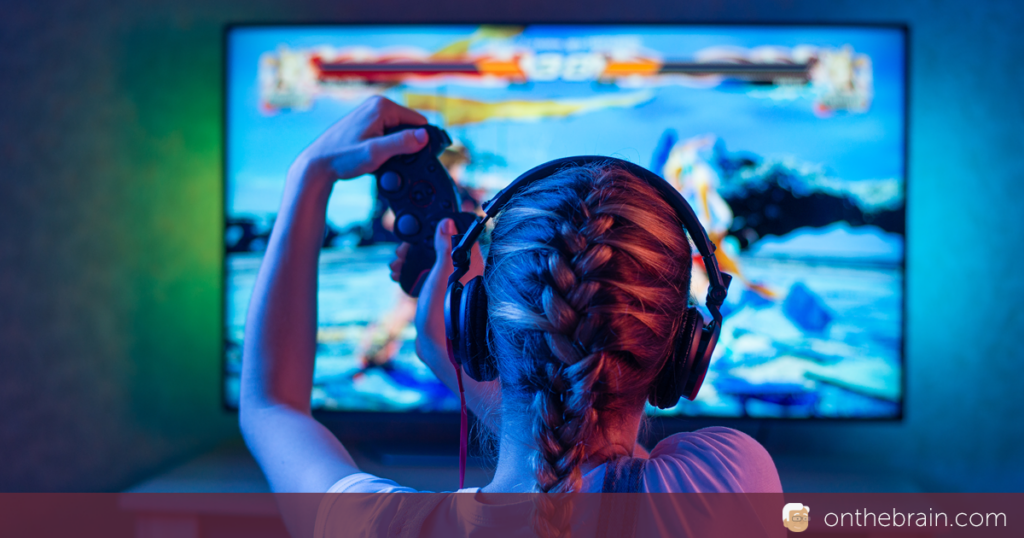
I also earlier argued that I thought that the Courts got it tragically wrong, when they declared that children could not be prevented from purchasing violent video-games, because it has not been demonstrated that they have any (negative) impact on them. “Images of hundreds of thousands of repetitions of bloody and gory mayhem don’t seem to affect Junior,” says the Court! Judge, I’ll bet my house against yours that if YOU were exposed to the same massive load of sadistic crap I could show that YOU would be behaviorally and neurologically affected by it. Because where, after all, do you think the refined sensibilities that define the person that you are COME from? The air? The Creator of the Universe? Leaping out of your genes? Or, just maybe, via brain plasticity, from your experiences in life?!

If you think that hundreds of thousands of little doses of violence have no impact on young brains, you have to explain a) why children learn to love them so much; b) whether all of this training will help children learn how to be nicer, Praise the Lord; c) or maybe something different.

Our Governor, Arnold Schwarzenegger, recently announced that California will appeal this decision. “Way to go, Arnold.” This citizen thanks you for not caving in, when this silly ruling came down. For the sake of America’s children, this citizen hopes and prays that, given another chance, the Courts can get this one right, as well.

Share and Enjoy:

  • Facebook
  • StumbleUpon
  • TwitThis
  • E-mail this story to a friend!
  • Digg
  • del.icio.us
  • Reddit
  • LinkedIn
  • Slashdot
  • Tumblr

Older Posts »